

If you were forced to make a controversial choice and knew your friends would find out what you chose, would that affect your decision?
In his 2012 article Accountability and Some Social Dimensions of Human Agency, social scientist Bennett W. Helm argues that human agency is never truly carried out without outside influence. We always consider our ties to the people around us and the responsibilities we carry. There are two perspectives on responsibility: the inner view (how we see our own capacities to choose and act) and the outer view (how others hold us to account). He insists that we cannot make sense of agency purely from an internal perspective because our ability to act meaningfully depends on being part of a community that evaluates, norms, and responds to our actions (PhilPapers, 2012). Helm proposes that all of our social contexts such as friends, groups we belong to or care about, or even the social networks we consider ourselves a part of matter deeply. He uses the phrase “communities of respect” to describe social circles that share practices, values, and norms. These communities give us a sense of dignity when we abide by their expectations and can take it from us when we violate them (ResearchGate, 2017). In other words, your choice is never made in a vacuum: the people around you shape the sense of whether you could choose differently and whether you should.

Considering that, ask yourself: what you would choose, but also how that would make you consider the choices your friends make when they know you are watching or judging. This brings us to collective or group agency, the blur between individual decision-making and the weight of group norms and identity. In the article A Pathology of Group Agency, philosopher Matthew Rachar examines how a group such as Proud Boys can manifest agency, and in some cases dysfunction. Rachar traces how individuals’ choices become embedded in group identities and how group structures can override or sublimate individual intentionality(PhilArchive, 2024). Put plainly: when you belong to a group, your choices are influenced by the group’s norms, reputation, and shared accountability. The fine line between my decision and our decision becomes blurry very quickly. Your own agency is still there, but it’s tangled with group expectations, peer accountability, and collective identity.
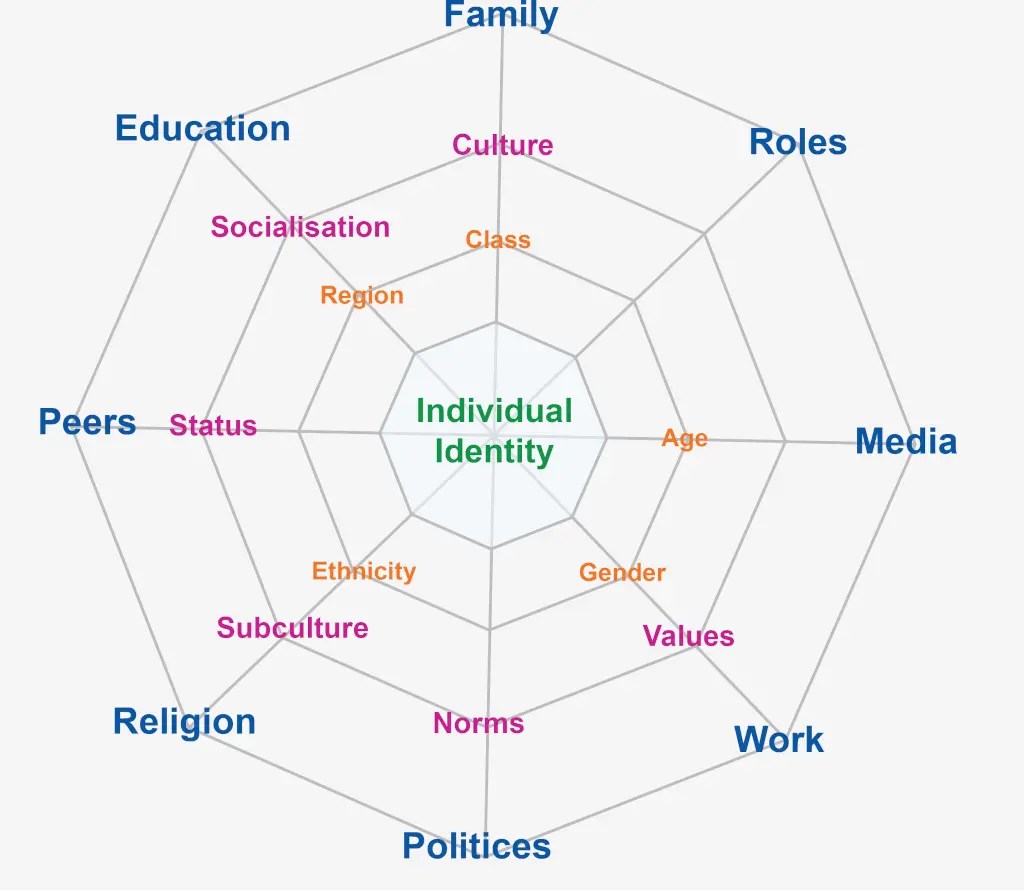
Human agency looks like an individual decision, but in practice it lives in a tapestry of social relationships. Your ability to decide, act, and hold yourself to account depends on your membership in communities of respect and on the group contexts you inhabit. When you act, you act as an individual, but you also act as someone seen, known, and judged by others. The group can amplify your freedom or confine it.
So next time you face a choice, however small or large, take a second to notice who is watching, think about who will know, and what the associative community expects from you. Recognizing that your own agency is both personal and social gives you more clarity and possibly more control over how you show up.
 Human Agency And Decision Making: An Introspective Blog
Leave a comment